
The Truth About Testosterone: What Men Are Not Being Told
A root-cause guide to testosterone decline, TRT (testosterone replacement therapy), and what actually works to improve testosterone levels naturally
In this article you will learn:
What testosterone actually does beyond performance and drive
The signs of declining testosterone most men miss
How toxins, gut dysfunction, and mitochondrial damage drive hormone decline and increased symptoms
What the research shows about TRT and cardiovascular risk
Seven evidence-based natural solutions with clinical references
A path forward whether you are on TRT or looking to avoid it
Most men think about testosterone in one context. The gym. The bedroom. Drive and performance.
But testosterone is a full-body protective hormone. It works in every system you have, every single day - protecting your heart, your bones, your brain, your metabolism, your mood, and your sleep. When it starts to decline, naturally as it is designed to do around your mid-thirties, the symptoms that follow are not inevitable. They are information. Symptoms are the only way your body can communicate with you.
This is the conversation most men are not having. And it is one I have needed to have for a long time.
What Testosterone Actually Does
Low testosterone is now recognized as an independent risk factor for heart disease - not just correlated to it, independent. It protects bone density the same way estrogen does in women. The research connecting low testosterone to cognitive decline and Alzheimer's risk is growing fast. Testosterone controls insulin sensitivity and body composition, regulates mood and motivation, and governs sleep architecture - most of your daily testosterone is released in pulses during deep sleep, which means poor sleep and low testosterone create a loop that feeds itself.
Understanding testosterone as a systemic protective hormone rather than a performance drug changes everything about how you respond when it starts to shift.
Natural Decline - and Why Symptoms Are Not Inevitable
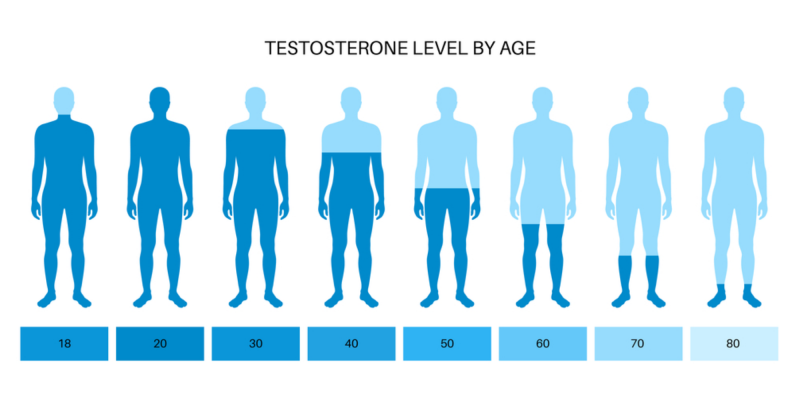
Natural Decline in Testosterone for Men by Age
Testosterone declining with age is natural. It starts around 30 and should decline approximately one to two percent per year after that. That is how the body was designed. That is how God designed it and he knew what he was doing.
What is not inevitable is suffering through it. The severity of symptoms is almost entirely determined by the terrain of the man testosterone is declining in - the gut, the liver, the sleep, the toxic burden, the metabolic health. A man with a clean system may barely notice the natural decline. A man whose system is burdened gets hit hard. The decline does not create the dysfunction. It exposes it. And that is an important distinction because terrain can be addressed, reversed, and restored.
NOTE - I wrote a blog just on the hormone lifecycle - production, circulation & action, breakdown, elimination - and how your symptoms can help identify the stage that is breaking down or is dysfunctional. It is geared towards women, but the mechanism is the same for both men and women. you can read it here.
The State of Men's Health - Why This Conversation Is Urgent
Heart disease is the number one killer of men. It accounts for nearly a quarter of all male deaths - and the overwhelming majority of those cases are tied to lifestyle. Meaning they are preventable. They are also reversible!
Here is what most men have never been told. Cardiovascular disease is now proven to begin developing twenty to thirty years before a diagnosis is ever made. Symptoms can appear ten years before lab markers change. The window for intervention is long - and it is reversible, especially earlier in the process. Everything covered in this article exists in that window.
Signs Men May Miss
Low testosterone rarely announces itself loudly. Most men just feel off. Low motivation. Harder to build or keep muscle. More belly fat. Mood that feels flatter. Less drive. Lower libido. Erectile Dysfunction. That general sense of - I just do not feel like myself anymore.
But here is one sign that almost nobody talks about. Look at your lower legs, from ankle to mid-calf. Men with declining testosterone often lose the hair in this area. The follicles stop getting what they need. Most men blame their socks.
It is not the socks. That is your body signaling a hormonal shift. And because symptoms can appear ten years before labs change, these early signals matter. They are the body's early language. If we know how to listen, we can act while reversing course is still straightforward.
The Real Driver - Toxins, the Gut, and the Mitochondria
Here is the piece that almost never makes it into the testosterone conversation. And it is the piece I believe sits at the root of most of what men are experiencing.
It starts with toxins. We live with an unprecedented toxic burden - environmental chemicals, pesticides, heavy metals, mold, endocrine disruptors. These compounds accumulate in tissue and drive pathogenic overgrowth in the gut.
Your gut is not just a digestion organ. It is directly involved in testosterone metabolism. In women we talk about the estrobolome - the gut bacteria that process and recirculate estrogen. Men have an equivalent. Researchers are calling it the testrobolome. The liver packages up used testosterone and sends it through bile into the intestinal tract for excretion. But not all testosterone is supposed to leave - some must be reabsorbed and recirculated. Your gut microbiome regulates that balance.
NOTE - I wrote a more detailed blog post about the gut-hormone connection here (it is geared towards women, but the mechanism is the same).
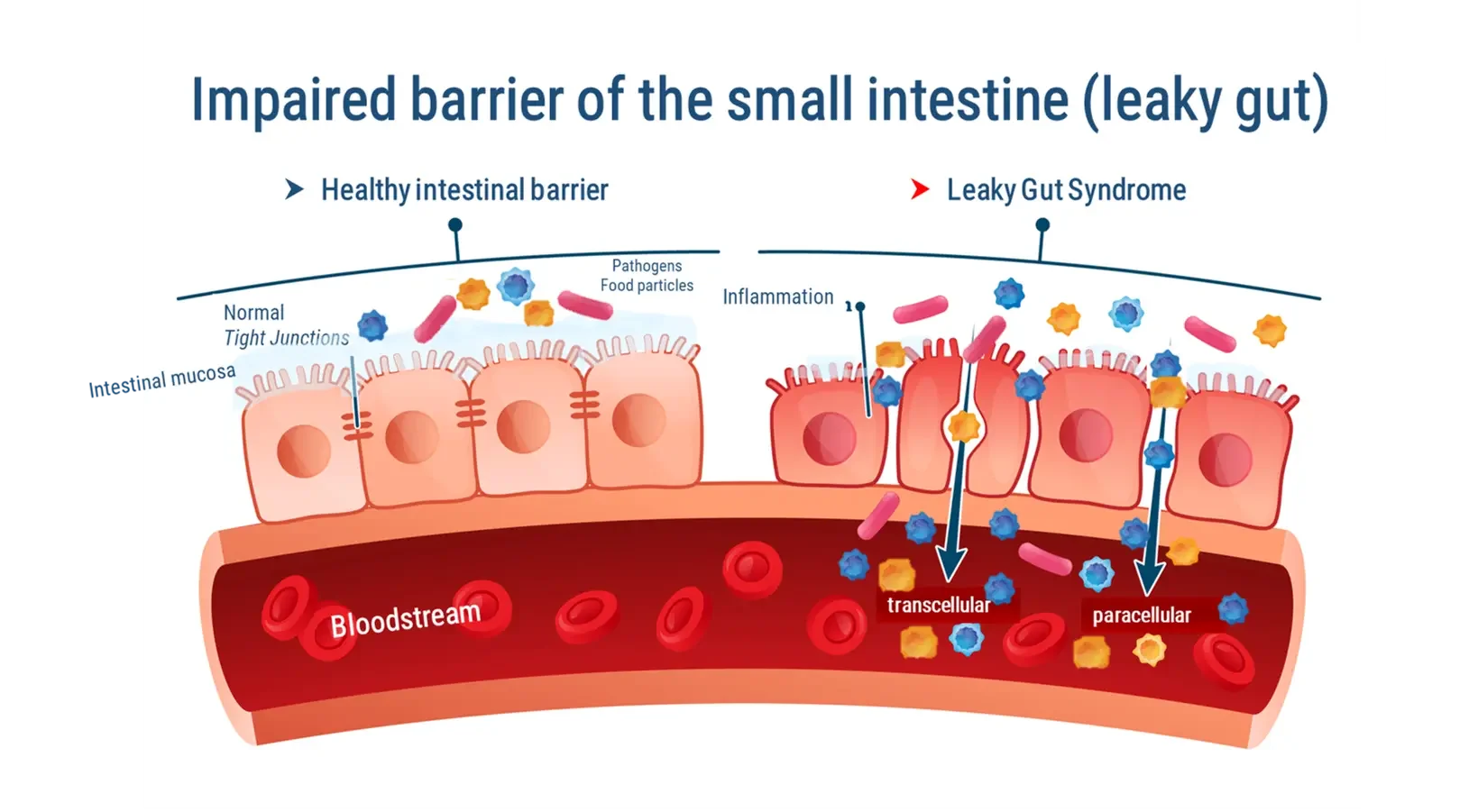
A healthy gut manages it appropriately. A dysbiotic gut throws it off. Researchers even identified one strain - Pseudomonas nitroreducens - that contains an enzyme which literally degrades testosterone. It is found in significantly higher levels in men with both low testosterone and high cholesterol. That is not a coincidence. That is a mechanism.
When the gut lining breaks down - leaky gut - things that were never meant to enter the bloodstream do. Food particles. Environmental toxins. And most significantly, LPS - lipopolysaccharide - a toxin from the outer wall of certain gut bacteria. When LPS enters circulation, the immune system fires a full inflammatory response. And that inflammation suppresses the Leydig cells in the testes - the cells that produce testosterone.
That same inflammation poisons the mitochondria. Making testosterone is one of the most energy-intensive processes in the body. The Leydig cells are packed with mitochondria. When they are compromised by chronic inflammatory and toxic exposure, hormone production drops. Not because something is broken. Because the environment inside the body does not support optimal production.
The cycle: toxic burden drives gut dysfunction, gut dysfunction drives inflammation, inflammation drives mitochondrial compromise, hormone production drops. Low testosterone then promotes fat accumulation. More fat drives aromatization - converting testosterone into estrogen. More estrogen drives more inflammation. The cycle feeds itself.
You cannot supplement, hormone-replace, or peptide your way out of a toxic terrain. The toxins have to be addressed first. Drainage pathways have to be open. The gut has to be healed and sealed. The mitochondria have to be restored.
Then the body has the conditions to produce what it was designed to produce, at the rate, or the amount, that it was supposed to.
The TRT Conversation - What You Deserve to Know
I am not anti-TRT. There are men for whom it is clinically appropriate and genuinely helpful. What I am passionate about is informed consent. Most men are not getting the full picture before they make a decision that affects their body's own production - potentially for the rest of their lives.
The Feedback Loop
Your hypothalamus is the master regulator at the top of the entire hormonal chain. It constantly monitors testosterone and sends signals downward. When it detects testosterone being supplied from outside, it reduces its output. The pituitary follows. The testes receive no instruction to produce. Over time they stop - in some cases physically reducing in size. This is not a side effect. It is the mechanism. And most men are not told this before they start.
The Cascade - Step by Step
Step one - the testes go quiet and so does the thyroid.
The signal that drives testosterone production, is the same signal that drives sperm production. When it drops, both drop. This is why TRT often affects fertility. The hypothalamus also manages the thyroid axis alongside the gonadal axis, so the thyroid begins to quiet too. Thyroid medication follows. This is not coincidence. This is the cascade.
Step two - insulin resistance builds.
A slowing thyroid drops metabolism. Disrupted sleep raises cortisol. Cortisol raises blood sugar. Visceral fat accumulates around the organs. Insulin resistance builds. Blood sugar climbs toward prediabetes.
And by the way… visceral fat around the organs can be present even in a lean and athletic man.
Step three - testosterone converts to estrogen and the blood thickens.
Aromatization, the conversion for testosterone to estrogen, happens in fat tissue - and visceral fat is not always visible. A man can look lean and still carry significant fat around his organs. Excess estrogen promotes blood clotting, drives water retention, and affects emotional regulation.
At the same time, exogenous testosterone (testosterone given from the outside and not naturally produced) drives red blood cells too high - polycythemia. The blood thickens. It clots more easily. The heart works harder.
Step four - the path to heart disease becomes visible.
Cholesterol is not the villain here. Cholesterol is the Band-Aid. When arteries become inflamed - from excess estrogen, from LPS in circulation, from elevated blood sugar, toxins - the body sends cholesterol to patch the damaged and brittle arteries. Plaques build. Arteries narrow. Blood that is already thick has less room to move. The heart works harder and harder. Eventually something gives.
That is not bad luck. That is a pathway. A completely traceable sequence of events starting with an intervention that was never paired with the question of why the testosterone was low in the first place, why symptoms were there, or what it was declining more than the normal rate.
Now how far a man goes down this cascade depends on the terrain of the man, the dose of TRT he is on, and how closely he is monitored,
The Emotional and Relational Piece
When testosterone converts to excess DHT and estrogen accumulates without being cleared, what happens neurologically is real and measurable. Reduced impulse control. Heightened reactivity. Paranoia. Emotional rigidity. Quicker to anger. Volitile and sometimes even violent.
Partners describe a person who looks the same but responds differently. One woman described it as feeling like she was grieving someone still standing right in front of her.
This is biochemistry - not a character flaw. And it almost never gets discussed before treatment begins.
Erectile Dysfunction - What Your Body Is Actually Saying
ED is not a testosterone problem. It is a cardiovascular signal. The blood vessels involved are among the smallest arteries in the body - one to two millimeters across. The vessels supplying the heart are three to four millimeters. Vascular damage always shows up in the smallest vessels first - years before it reaches the larger ones. If blood is not flowing properly there, it is not flowing properly everywhere. The heart just has not shown its hand yet.
Men with ED have a 2 -3 times higher risk of a cardiovascular event in the following 5 - 10 years. ED is not the problem. It is the preview. Your body is not failing. It is communicating. And it is communicating in the only way it knows how… symptoms.
Seven Evidence-Based Natural Solutions
Now that you understand the terrain, here is why each of these matters. These are not wellness tips. They are foundational inputs that support the body's ability to produce what it was designed to produce.
Sleep - one week of five-hour nights dropped testosterone in healthy young men by ten to fifteen percent in a published study. That is ten to fifteen years of aging in seven days. Seven to nine hours, consistent timing, dark cool room, no alcohol within three hours of bed. Get checked for sleep apnea if you snore - it creates oxygen deprivation directly inside the cells that produce testosterone.
Resistance training - the only form of exercise with a clear consistent positive effect on testosterone. Compound movements three to four times a week. Recover well. Excessive high-volume endurance training can suppress free testosterone through sustained cortisol elevation.
Vitamin D - receptors live directly on the Leydig cells that produce testosterone. Men with low Vitamin D who supplemented for twelve months saw testosterone rise around twenty-five percent in a clinical trial. Target forty to sixty nanograms per milliliter. Take D3 with K2 and magnesium. Get actual sunlight on bare skin. Food sources include fatty fish, egg yolks, beef liver, and cod liver oil.
Zinc - deficiency alone dropped testosterone in healthy men by seventy-three percent in twenty weeks. Replenishing it doubled testosterone in six months in deficient men. Fifteen to thirty milligrams of zinc picolinate or bisglycinate per day. Check zinc before considering TRT.
Eat real food including fat (healthy fats) - cholesterol is the raw material for every steroid hormone. Healthy fats support both hormone production and bile production - how the liver clears used testosterone. Cut refined carbohydrates, proven to suppress production. Reduce seed oils, which drive inflammation and visceral fat accumulation.
Targeted herbs and nutrients -
Ashwagandha - lowers cortisol which competes with testosterone.
Tongkat Ali - stimulates the hypothalamus and pituitary to send stronger production signals and lowers SHBG - the protein that binds testosterone and keeps it inactive.
Shilajit - supports mitochondrial function in the Leydig cells - a ninety-day trial showed over twenty percent rise in testosterone.
Additional support from:
Horny Goat Weed - for thyroid and testosterone together,
DIM - to slow testosterone-to-estrogen conversion
Wild Oat - to release bound testosterone
Boron - for testosterone conversion support.
Address the terrain - everything above works better in a clean system. Before supplements, before anything else, the toxic burden must be addressed. Drainage pathways open. Gut healed and sealed. Mitochondria restored. You can do everything else on this list and still not move the needle if the terrain underneath is still toxic.
There Is a Path Forward
If you are already on TRT, you have two valid paths forward - and both start in the same place.
Some men want to come off. There is a path. It requires opening drainage pathways, clearing toxic burden, healing the gut, and restoring mitochondrial function. Not guaranteed for everyone. But real for some. The body wants to regulate itself. It just needs the right conditions.
Other men want to stay on TRT - and that is a completely valid choice. The terrain work still matters enormously. A clean gut means less aromatization. Open drainage means the liver can clear excess estrogen. Lower toxic burden means the mitochondria are not compromised. You can be on TRT and be significantly healthier about it.
Whether you want off or want to optimize where you are - the path starts the same way. Clean the terrain. Support the foundations. Give your body the conditions it needs.
You cannot out-testosterone a dirty body. But a clean, supported body responds to everything differently - including the testosterone you are giving it.
WANT TO LEARN MORE - Watch the Full Episode
This blog post accompanies the full episode - watch it on YouTube or listen on the podcast. Both links are below.
WATCH HERE on YouTube: https://youtu.be/6LgA2UUP-ao
LISTEN HERE:
Apple Podcast: https://podcasts.apple.com/us/podcast/ep-14-the-truth-about-testosterone-what-men-are-not/id1883806556?i=1000769504990
Spotify: https://open.spotify.com/episode/7DOSvgiAL466cUYmyPjrOE
Ready to go deeper? I have an 18-minute training - Stop Managing Symptoms. Start Living - that dives into what it actually looks like to address the root of what this transition is revealing. Watch free here: https://go.cleanliferealworld.com/opt-in
Happy Healing!
Elena xoxoxo

Elena Peden, BCND, FMCHC, MBSR-P
Board-Certified Naturopathic Doctor | Functional Medicine Certified Health Coach | Drainage & Detox Specialist
Clean Life Real World | cleanliferealworld.com
Frequently Asked Questions
What are the signs of low testosterone in men?
Low testosterone commonly presents as low motivation, difficulty building or keeping muscle, increased belly fat, mood changes, brain fog, reduced libido, and fatigue. One lesser-known sign is loss of hair on the lower legs from ankle to mid-calf - the follicles stop getting what they need. Importantly, symptoms often appear years before lab markers change, making early recognition important.
Does testosterone replacement therapy cause heart problems?
Exogenous testosterone can contribute to cardiovascular risk through several documented mechanisms. These include polycythemia - abnormally elevated red blood cell density that thickens the blood - increased aromatization of testosterone into estrogen which promotes clotting and arterial inflammation, insulin resistance from metabolic cascade effects, and thyroid suppression. The degree of risk depends on dose, delivery method, how carefully the protocol is monitored, and whether the underlying cause of low testosterone was ever addressed.
Can you boost testosterone naturally without TRT?
Yes. Multiple interventions have human clinical trial data supporting testosterone support. Optimizing sleep is the most impactful - one week of five-hour nights dropped testosterone by ten to fifteen percent in a published study. Resistance training consistently raises testosterone. Correcting Vitamin D deficiency raised total testosterone by approximately twenty-five percent in a twelve-month clinical trial. Zinc repletion doubled testosterone in deficient men in six months. Adaptogens including ashwagandha KSM-66, tongkat ali, and shilajit all have randomized controlled trial data for testosterone support in men.
What is the testrobolome?
The testrobolome is the collection of gut bacteria involved in testosterone metabolism in men - the male equivalent of the estrobolome in women. The gut microbiome regulates how much testosterone gets reabsorbed versus excreted after the liver processes it. A healthy gut manages this balance appropriately. Gut dysbiosis - driven by toxic burden and pathogenic overgrowth - throws it off. Some bacteria actively degrade testosterone rather than recycle it. Pseudomonas nitroreducens is one strain shown to be elevated in men with both low testosterone and high cholesterol.
Does TRT affect fertility in men?
Yes, significantly. Exogenous testosterone suppresses LH and FSH - the pituitary signals that drive both testosterone production and sperm production. When those signals drop, sperm production drops with them. This is one of the most important things younger men are not told before starting TRT. Fertility impacts can range from reduced sperm count to azoospermia. This is often reversible with proper protocols after stopping TRT, but recovery is not guaranteed and can take time.
What causes testosterone to decline faster than normal?
Natural testosterone decline of one to two percent per year beginning around age 30 is expected. Accelerated decline is associated with chronic toxic burden from environmental chemicals, pesticides, heavy metals, mold, and endocrine disruptors - all of which can impair mitochondrial function in the testosterone-producing Leydig cells. Gut dysbiosis, leaky gut, chronic sleep disruption, insulin resistance, visceral fat accumulation, and chronic stress all contribute to faster-than-expected decline.
Is erectile dysfunction a sign of low testosterone?
Erectile dysfunction is primarily a cardiovascular signal rather than a testosterone problem. An erection is a blood flow event, and the vessels involved are among the smallest arteries in the body - one to two millimeters. Vascular damage shows up in the smallest vessels first, years before it reaches larger ones. Men with ED have a two to three times higher risk of a cardiovascular event in the following five to ten years. ED can coexist with low testosterone, but addressing only testosterone without addressing the cardiovascular and terrain issues misses the root cause.
What is the connection between testosterone and the thyroid?
The hypothalamus manages both the gonadal axis - which drives testosterone production - and the thyroid axis simultaneously. When exogenous testosterone is introduced, the hypothalamus detects adequate levels and reduces its signaling output. This affects not just testosterone production but can also dampen thyroid signaling through the pituitary. Men on TRT who develop hypothyroid symptoms including fatigue, cold sensitivity, and brain fog may be experiencing this cascade effect. The connection between TRT initiation and subsequent thyroid medication is underreported and rarely discussed in pre-treatment conversations.
How does cholesterol relate to testosterone production?
Cholesterol is the essential raw material for every steroid hormone in the body, including testosterone. The hormone synthesis process begins in the mitochondria of the Leydig cells, where cholesterol is converted into the precursor that eventually becomes testosterone. Cholesterol also enables bile production, which is how the liver moves used testosterone out of the body for appropriate excretion or recirculation. Men on very low fat diets or on statin medications sometimes experience testosterone decline related to reduced cholesterol availability for hormone synthesis.
CLINICAL REFERENCES
Sleep and testosterone: Leproult R, Van Cauter E. JAMA. 2011;305(21):2173-2174.
Vitamin D and testosterone: Pilz S et al. Horm Metab Res. 2011;43(3):223-225.
Tongkat ali: Leisegang K et al. Maturitas. 2021.
Ashwagandha: Wankhede S et al. J Int Soc Sports Nutr. 2015;12:43.
Shilajit: Pandit S et al. Andrologia. 2016;48(5):570-575.
Gut microbiome and testosterone - testrobolome: Collden H et al. Am J Physiol Endocrinol Metab. 2019.
Zinc and testosterone: Prasad AS et al. Nutrition. 1996;12(5):344-348.
Cholesterol and arterial inflammation: Cohen PG. Med Hypotheses. 1999;52(1):49-51.
Men's health statistics: CDC National Center for Health Statistics. Fastats - Men's Health.